


Composite grating instead of steel
Moulded grating made of glass fibre and resin: rust-free, non-conductive and up to 70% lighter than steel.
Product families
All made from the same material: glass fibre reinforced polyester. Mesh size, height and surface vary with the application.
-
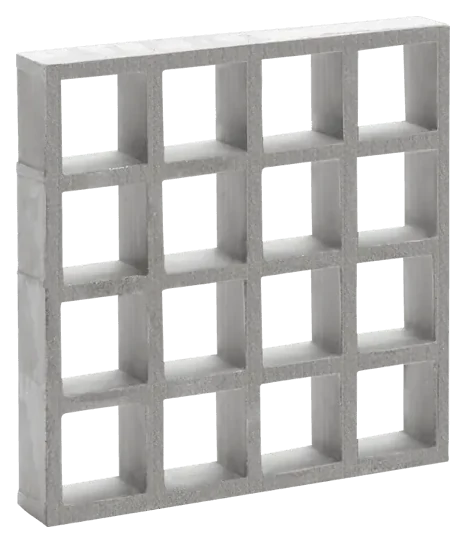
Moulded grating 38×38
Our main product. Square mesh in five heights, for platforms, walkways and channel covers.
- Height
- H25, H30, H38, H50, H58
- Open area
- 68% to 74%
- Panel
- 1000×4040 mm
-
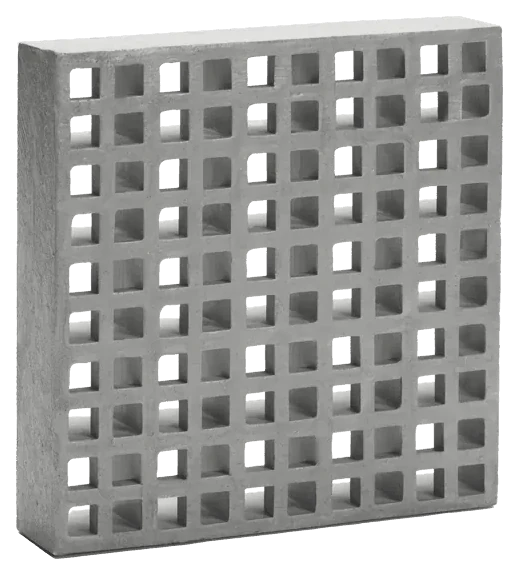
Mini mesh 19×19
Fine-mesh top surface: 19×19 mm mesh on top, 38×38 mm below.
- Height
- H30, H38
- Open area
- 42% to 44%
- Panel
- 1000×4040 mm
-
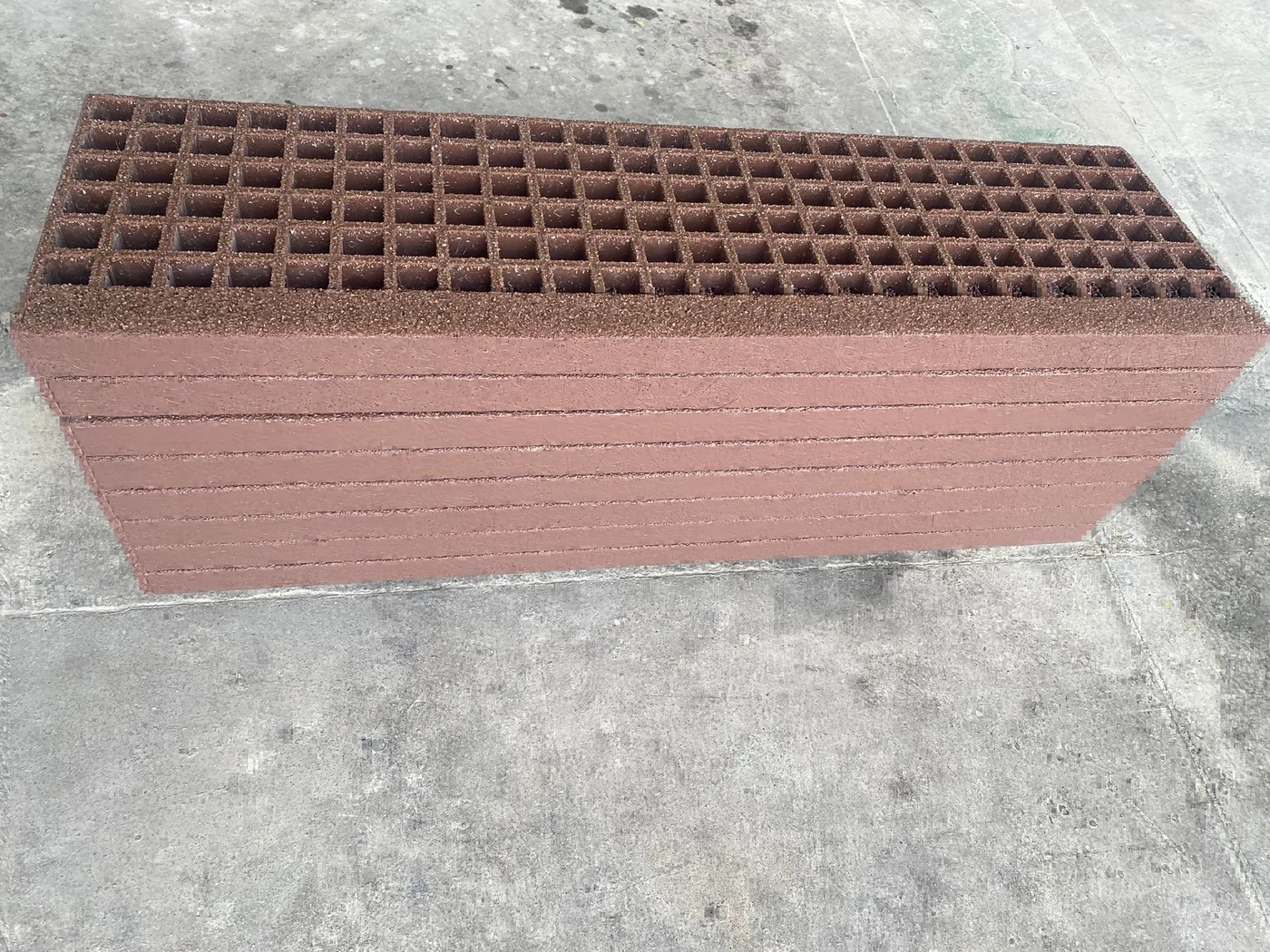
Stair treads
Cut to size from moulded grating. A gritted nosing prevents slipping at the front edge of the tread.
- Nosing
- Gritted, anti-slip
- Size
- Cut to project
-
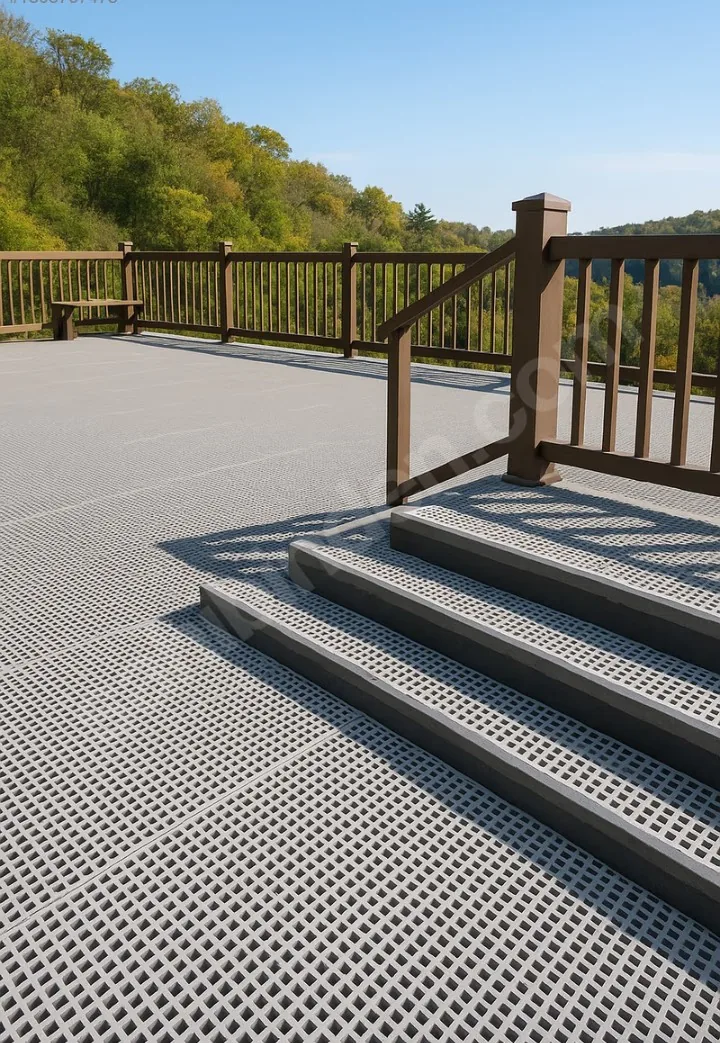
Platforms and walkways
Panels are fixed to the structure with M-type clips and can be cut on site with a circular saw.
- Fixing
- M-type clip
- Cutting on site
- Circular saw
-
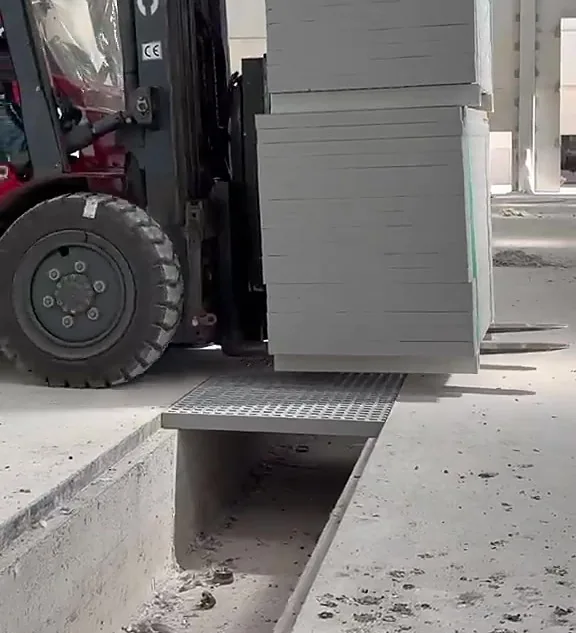
Drainage channel gratings
Grating covers for channels. The load class is selected with reference to the EN 124 classes, according to the location of use.
- Classification
- EN 124 load classes
- Colour
- On request
-
Surfaces, colours and load table on one page
Four surface types, five colours and approximate load values by span.
View products


Why composite, not steel?
The same four questions, two materials. Use the switch to compare steel grating with composite grating.
-
Corrosion
Steel gratingCorrosion resistance is moderate for galvanised steel and low for ductile iron.
Composite gratingDoes not rust. Resistant to acids, alkalis and salt water.
-
Weight and installation
Steel gratingHeavy panels mean more work in transport and installation.
Composite gratingUp to 70% lighter than steel. Installation without a crane, lower transport costs.
-
Electricity
Steel gratingConducts electricity.
Composite gratingNon-conductive and non-magnetic. Suitable for substations and energy facilities.
-
Maintenance and security
Steel gratingNeeds painting and regular inspection. Has scrap value, so it can be stolen.
Composite gratingNeeds no painting or regular inspection. No scrap value, so no risk of theft.
For wet, chemical and electrical environments
The main areas where composite grating is used. Tell us about your project environment and we will choose the right model together.

Treatment plants
Walkways and handrails over basins; no rust despite constant moisture.

Chemical and petrochemical
Acid- and alkali-resistant platforms and walkways.

Food and beverage plants
A rust-free, anti-slip surface for wet floors that are washed frequently.

Energy and cooling towers
Non-conductive platforms and stairs.

Marinas, ports and shipyards
Walking surfaces resistant to salt water.

Rail systems and substations
Insulating, non-magnetic platforms.

Pools and jetties
A rust-free, anti-slip surface over water.

Architecture and facades
Balcony and facade applications with smooth-surface panels.
- Treatment plants
- Chemical and petrochemical
- Food and beverage plants
- Energy and cooling towers
- Marinas, ports and shipyards
- Rail systems and substations
- Pools and jetties
- Architecture and facades
Choose the mesh size
Three mesh types, eight models. See the scaled texture, technical drawing and values for the mesh you choose.
- Mesh
- 38×38 mm square mesh
- Height
- H25, H30, H38, H50, H58
- Bar top / bottom
- 6.5 / 5 mm (H25, H30, H38); 11 / 8 mm (H50); 11 / 9 mm (H58)
- Open area
- 68% (H25, H30, H38); 74% (H50, H58)
- Weight
- ~12.5 kg/m² (H25) to ~42 kg/m² (H58)
- Standard panel
- 1000×4040 mm; for H38 also 1220×3660 and 1000×3000 mm
- Mesh
- 50×50 mm square mesh
- Height
- H50
- Bar top / bottom
- 9 / 7 mm
- Open area
- 72%
- Weight
- ~23.5 kg/m²
- Standard panel
- 1220×3660 mm
- Mesh
- Mini mesh, 19×19 mm mesh on top, 38×38 mm below
- Height
- H30, H38
- Bar top / bottom
- 6.5 / 5 mm
- Open area
- 42% (H30), 44% (H38)
- Weight
- ~18.5 kg/m² (H30), ~21 kg/m² (H38)
- Standard panel
- 1000×4040 mm


The texture on the left is to scale: mesh and bar thickness in true proportion. Dimensioned drawing of the module.
You can also rotate it with the arrow keys.
38×38 mesh models
| Model | Bar top / bottom (mm) | Open area | Weight | Standard panel (mm) |
|---|---|---|---|---|
| 38×38 H25 | 6.5 / 5 | 68% | ~12.5 kg/m² | 1000×4040 |
| 38×38 H30 | 6.5 / 5 | 68% | ~14 kg/m² | 1000×4040 |
| 38×38 H38 | 6.5 / 5 | 68% | ~18.5 kg/m² | 1220×3660, 1000×3000, 1000×4040 |
| 38×38 H50 | 11 / 8 | 74% | ~36 kg/m² | 1000×4040 |
| 38×38 H58 | 11 / 9 | 74% | ~42 kg/m² | 1000×4040 |
50×50 and mini mesh models
| Model | Bar top / bottom (mm) | Open area | Weight | Standard panel (mm) |
|---|---|---|---|---|
| 50×50 H50 | 9 / 7 | 72% | ~23.5 kg/m² | 1220×3660 |
| 19×19 H30 | 6.5 / 5 | 42% | ~18.5 kg/m² | 1000×4040 |
| 19×19 H38 | 6.5 / 5 | 44% | ~21 kg/m² | 1000×4040 |
On mini mesh models the top mesh is 19×19 mm and the bottom mesh 38×38 mm. Values are approximate.
Six steps from resin and glass fibre to panel
Moulded grating is formed by combining glass fibre with resin in a mould and curing it under heat and pressure.

Raw material preparation
Polyester resin, glass fibre, fillers and additives are prepared.
Mould preparation
The mould for the model to be produced is prepared.
Fibre placement
Glass fibre is laid into the mould in layers and combined with resin.
Polymerisation
The panel is cured under heat and pressure.
Cutting and shaping
The panel is cut to size, shaped and edge-finished.
Surface finishing and quality control
A gritted, concave or smooth surface finish is applied; the panel passes quality control.
Introductory video. It loads from YouTube when you play it.

From the plant and the field
Panels made in our own plant, and the same panels installed on site.

Grey panels stacked in the plant.

Moulded grating in yellow.

Grey grating deck on a footbridge.
Frequently asked questions
Short answers about mesh size, surfaces, installation, colours and technical documents.
Which mesh sizes are available?
38×38 mm mesh comes in heights H25, H30, H38, H50 and H58; 50×50 mm mesh in H50; 19×19 mini mesh in H30 and H38. On mini mesh the top mesh is 19×19 mm and the bottom mesh 38×38 mm.
Which surface options are available?
There are four surface types: the standard concave surface, a gritted surface for extra slip resistance, a sanded smooth surface for decorative and facade applications, and a covered surface bonded to a flat plate.
How does composite grating differ from steel grating?
It does not rust and resists acids, alkalis and salt water. It is non-conductive and non-magnetic. It is up to 70% lighter than steel and needs no painting or regular inspection. With no scrap value, it carries no risk of theft.
How are panels cut and fixed?
Panels are cut to size on site with a circular saw and fixed to the supporting structure with M-type fixing clips. Installation does not require a crane.
Which colours are available?
Black, grey, yellow, green and blue. Other colours on request.
How is the load rating determined, and how do I get technical documents?
The point load and uniformly distributed load values in the load table are approximate for each span; the exact value is calculated for each project. Send us your span and load conditions. Contact us for technical documents and certificates.
Send us the sizes and we will prepare the quote
Product type, mesh size and approximate quantity or square metres are enough. Fill in the form or call us directly.
Head office
Eskişehir Organize Sanayi Bölgesi, 2005. Cadde No:20, Odunpazarı / Eskişehir
Contact us for technical documents and certificates.